EV Charging in Real Life: What Drivers Should Know Before Switching to Electric
software development

Branko Nikitović
CEO
Electric vehicles are becoming part of everyday mobility across Europe. Charging networks are expanding, more models are available, and more drivers are considering the switch. The promise is attractive: lower running costs, quiet driving, strong acceleration, fewer traditional maintenance tasks, and a cleaner way to move.
But EV ownership also comes with a reality check.
The numbers in brochures are useful, but they rarely tell the whole story. Real range, charging speed, battery behavior, outside temperature, driving style, public charger availability, and even the way charging power is shared at a busy station can all change the experience.
So before asking “Is an EV worth it?”, it is better to ask a more practical question:
Will an EV fit the way I actually drive, park, charge, and travel?
Range Is the First Question, But Not the Only One
Range is usually the first thing people ask about electric vehicles.
If your EV has a realistic range of 250-400 km, and your daily driving is usually below 100-200 km, there is probably little reason to worry. For commuting, city driving, school runs, errands, and regular local routes, that range is more than enough.
Longer trips are different.
When your route exceeds the vehicle’s range, charging becomes part of the plan. You need to know where public chargers are, whether they are available, how fast they charge, and whether they are working. And yes, in real life, chargers can be occupied, out of service, slower than expected, or limited by local grid capacity.
That is where EV ownership starts to differ from driving a petrol or diesel car.
Charging Is Simple, Until the Details Matter
For the driver, charging usually looks simple.
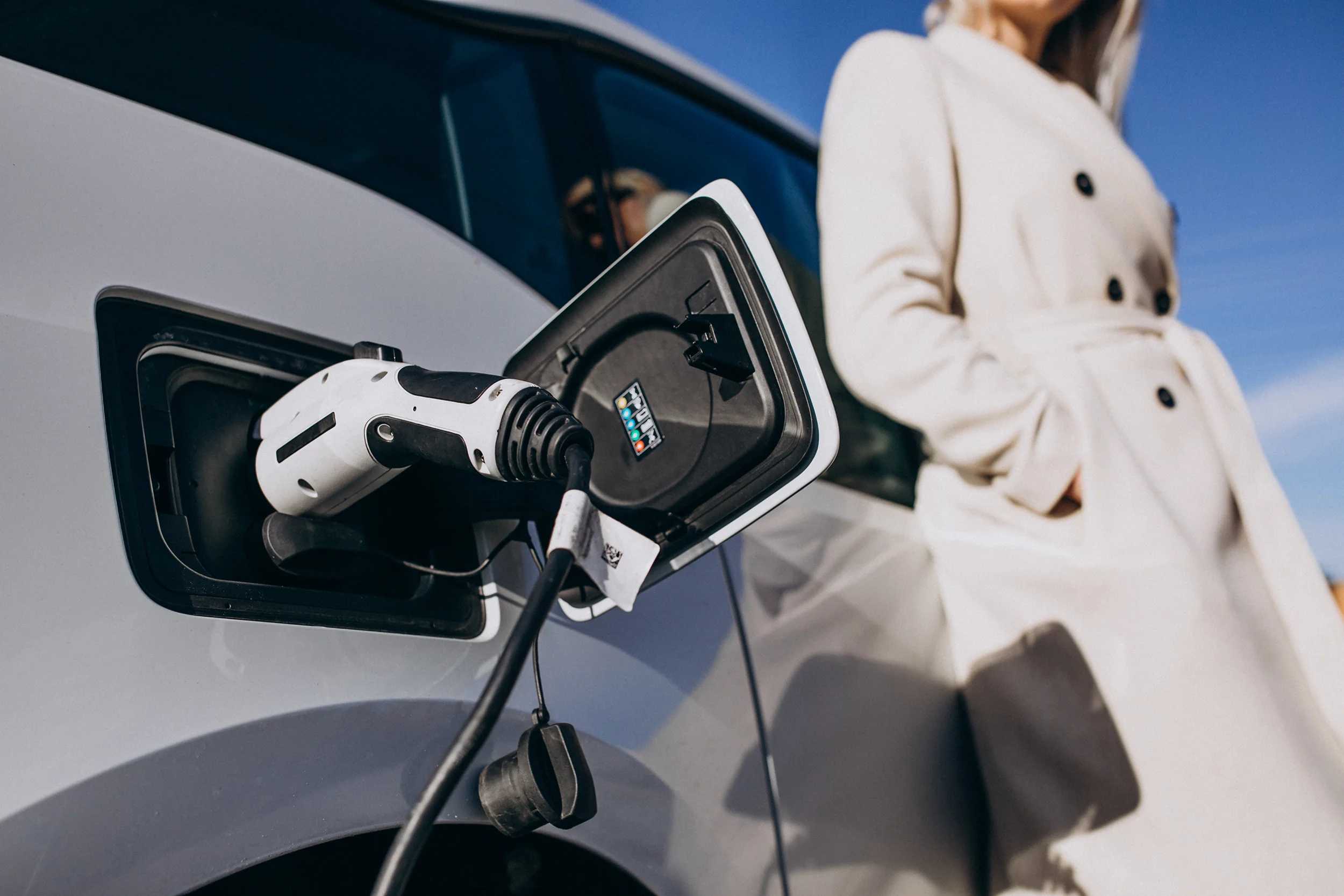
You connect the vehicle, open an app, scan a QR code or use an RFID card, and the session starts. The vehicle, charger, and mobile app show how much energy is being transferred, how much the session costs, and when the battery should reach the desired level.
Behind that simple process, several things need to work together: the charger, vehicle, authentication method, mobile app, payment system, billing logic, and operator backend.
Charging power is one of the most important practical details.
An ordinary 220-240 V household socket may provide around 3 kW. A fixed home or garage charger can usually deliver 11 or 22 kW. Public fast chargers can provide tens or hundreds of kilowatts, while the newest high-power chargers go even further in ideal conditions.
In theory, the math is simple: charging power multiplied by time gives the energy added to the battery. Charging at 11 kW for four hours adds around 44 kWh. A 200 kW charger could theoretically add the same amount in less than 15 minutes.
In practice, the actual charging speed depends on the vehicle, battery temperature, state of charge, charger capability, and available grid power.
EV Consumption Depends on Real Conditions
With petrol and diesel vehicles, consumption is usually measured in liters per 100 km. With EVs, we talk about Wh/km or kWh/100 km.
A typical electric passenger car may consume around 15-25 kWh/100 km, but real consumption depends on several factors.
The first is speed.
Driving at motorway speed consumes significantly more energy than driving at lower, steady speeds. Air resistance increases quickly as speed rises, so 130 km/h on the motorway is very different from 70 km/h on a regional road.
The second is outside temperature.
EVs are most efficient when the cabin does not need much heating or cooling. Winter heating and summer air conditioning can noticeably reduce range. Newer EVs often use heat pumps, which help efficiency, but temperature still matters.
The third is driving style.
Aggressive acceleration uses more energy. Smooth driving and steady speed can make a visible difference. Many EV drivers quickly become more mindful of acceleration, braking, and speed because the effect on range is easy to see.
Why EVs Feel Different
EVs also bring several advantages that are easy to appreciate once you drive one regularly.
Regenerative braking is one of them. When the vehicle is slowing or going downhill, the motor can work as a generator and return energy to the battery. This reduces consumption and changes the driving experience.
EVs are also efficient in stop-and-go city traffic. When standing still, they consume very little energy unless heating or cooling is heavily used. That makes them well suited for urban driving.
Another major difference is torque. Electric motors deliver strong torque immediately, which gives EVs strong and smooth acceleration.
Braking also feels different. Because regenerative braking slows the vehicle when the driver lifts off the accelerator, the brake pedal is used less often. Over time, that can immensely reduce wear on brake discs and pads.
And then there is the quietness. At lower speeds, EVs are noticeably calm inside the cabin. At higher speeds, wind and tire noise become higher, but the overall driving experience remains different from traditional vehicles.
The Cost Advantage Depends on Where You Charge
Cost is one of the strongest arguments for EV ownership, especially if you can charge at home.
Home charging can be significantly cheaper than driving on petrol or diesel. For people who drive a lot and can charge overnight at lower electricity prices, the savings can be substantial, even less than 10% of gasoline equivalent. Public charging is different.
Prices vary depending on the operator, location, charging power, and billing model. Some operators charge per kWh, while others charge by time. Fast charging is usually more expensive than home, and the total cost of a trip can vary depending on where and how you charge.
So the cost advantage is real, but it depends heavily on your habits.
The Reality Behind Advertised Numbers
One of the most important things to understand is that advertised range and charging speed are often based on ideal conditions.
Real life is less controlled.
Battery capacity, vehicle speed, outside temperature, heating or cooling, traffic, route profile, charger availability, and battery management all affect the final result.
Battery behavior is also different from a fuel tank. It is usually not ideal to charge to 100% every day or discharge close to 0%. For long-term battery health, you should keep the battery within a healthier range of 20-80%, or ideally 30-60%, and charge to 100% mainly before longer trips.
Charging speed is also dynamic. Even if a charger can deliver very high power, the vehicle may not accept that maximum power throughout the whole session. The car manages charging speed based on battery condition, temperature, and state of charge.
That is why a fast charger does not always mean the same charging time in every situation.
Public Charging Adds Another Layer of Reality
Long-distance travel depends on public charging infrastructure.
During holidays, weekends, or peak travel periods, public chargers can be busy. Waiting for an available charger may become part of the trip. And when multiple vehicles charge at the same site, available power may be shared between them.
For example, a charger with two connectors may split available power between two vehicles. If one car is charging, it may get higher power. If another vehicle connects, both may charge more slowly.
This is not always obvious to a new EV driver, but it becomes part of the real charging experience.
So, Should You Switch to an EV?
The answer depends on your real driving habits.
If your daily routes fit within the vehicle’s realistic range, if you can charge at home or at work, and if you are comfortable planning longer trips more carefully, an EV can be a very good choice.
The advantages are clear: lower running costs, quiet driving, strong acceleration, regenerative braking, less traditional engine maintenance, and a modern driving experience.
But the decision should be based on real use, not only on advertised numbers.
EV charging feels simple when everything works. Behind that simplicity, however, there is a complex ecosystem of chargers, vehicles, apps, payment systems, billing logic, user authentication, operator platforms, and public infrastructure.
That is why real-world validation matters.
For drivers, it helps set realistic expectations.
For companies building EV charging systems, it is even more important: every charging session depends on multiple systems working together reliably before the driver ever plugs in.